Green noise
Nekrasov’s poem “The Green Noise” (Зеленый шум, 1862–63) takes us inside the perspective of a peasant man who decides to kill his wife. She voluntarily tells him—he wishes she hadn’t—about something that happened to her while he was in St. Petersburg. It’s hard for the reader to tell if she was raped or had an affair, since we hear this through the “I” of a husband concerned about something other than consent. Listening to winter’s cruel voice, the man is obsessed with his own feelings and the fear he will lose the community’s respect if he does nothing. With the coming of spring (the Green Noise), his mind turns to love, patience (in this context peasant terpenie becomes as positive in a Nekrasov poem as in a Tiutchev one), and forgiveness, and he drops the knife he was going to murder his wife with.
I’ve always found the poem striking. Who is it for? Is a hypothetical male peasant reader (listener?) supposed to be rhetorically persuaded not to enforce patriarchal norms through violence? Are educated urban readers supposed to learn a nuanced truth about peasant men, so they don’t idealize or demonize them? Are educated men supposed to adopt new ideas about gender relations through the mechanism of “realizing” that their social group is more “advanced” than this peasant? Or is the poem a portrait of destructive obsession (and an exit from it) that’s relevant for any social group?
This is the poem where Nekrasov worked out the meter he would use for another peasant-voiced work, Who Can Be Happy in Russia? (Кому на Руси жить хорошо, about 1863-1877)—several 8-syllable lines of iambic trimeter with dactylic rhyme, punctuated by a 6-syllable line with masculine rhyme every so often—and J. Alexander Ogden’s idea of ventriloquism in Who Can Be Happy is relevant for “The Green Noise” too.
One thing about the poem that’s been known since a 1935 article by Soviet scholar I. S. Abramov, but that I only came to appreciate this year, is that Nekrasov took the central “green noise” image and most of the first post-refrain stanza from an 1856 article in a Slavophile journal. The nature language that Nekrasov has spoken by a seemingly Russian married man comes from a song supposedly sung by unmarried Ukrainian women and commentary about that song by Mikhail Maksimovich (1804–1873), the same scholar who vouched for Gogol’s proficiency in Ukrainian. Maksimovich’s article appeared in the very first issue of Russian Colloquy, whose entire 20-issue run is available on the internet. I’ve added it on the right sidebar, but the credit goes to Wikipedia editor Haendelfan for posting links to multiple digitized versions in late 2021.
The early and late Putin years in detective shows
With another new year, Putin (24-year reign, if you include the tandem of 2008–2012) is catching up to the nineteenth-century rulers Alexander I (also 24 years), Alexander II (26 years), and Nicholas I (30 years). And just as getting to know the nineteenth century means learning about not just watershed dates, but gradations within one reign—like the comparatively open period under conservative Nicholas I in the mid-1840s, long after the Decembrists but before the events of 1848—people are already starting to divide the Putin years into periods.
One way to get a feel for what’s changed is from a novel written in the early Putin years, One Shadow for Two (Одна тень на двоих, 2003) by Tat’iana Ustinova (b. 1968), which was adapted for television in both 2005 and 2023. Spoilers ahead, links to videos at the end.
In both adaptations, the central character is Danilov, a successful architect from a well-to-do, cultured family. His strict and intolerant mother had been training him to be a pianist, but he rebelled, turning his back on music and marrying a woman his mother thought beneath him. His father, a famous writer who later emigrated, was not as forceful a personality. Danilov’s violinist friend Tarasov, from a much poorer family, was musically talented and quasi-adopted by Danilov’s parents.
The woman Danilov married, Nonna, was found murdered a few years before the main story begins. Danilov was suspected, but the crime remained unsolved. The dead woman’s brother Veniamin held Danilov responsible and frequently demanded money from him.
Danilov’s longtime friend Marta is devoted to him, but Danilov is in a relationship with a different woman, Lida. However, a few months earlier, Danilov and Marta had to share a hotel room on a trip and had sex one time. Marta is pregnant but has not told Danilov the baby is his.
After side plots and more murders, it becomes clear that Tarasov killed Danilov’s first wife and everyone else. Tarasov’s whole life was envy of and resentment toward Danilov, who was freely given the opportunities Tarasov had to fight for, but Danilov didn’t even want them. Tarasov pays more attention to Danilov’s mother than Danilov himself does, but can never become her actual son. In a final confrontation on a rooftop, Tarasov falls to his death while trying to kill Danilov. Danilov realizes that Marta is the woman he should be with.
Plausible morals of the story: educated Russians in Russia are good, but they are endangered by the jealousy of the poor and the treachery of émigrés. Men like Danilov should be ambitious in their careers and (especially in 2023) marry women who are family-oriented, while women like Marta are free to choose ambitious men over someone stable but boring.
The 2023 adaptation is less than half as long as the 2005 one, so it’s no surprise that plotlines and characters are minimized or cut, but of course the choices of what to leave out aren’t random. Here are some changes I noticed.
Dr. Znamenskaia and Danilov’s father: In 2005, we learn that Danilov’s father (a Soviet shestidesiatnik writer who emigrated to New York) married Danilov’s mother (a Western-oriented harpy and snob) instead of Znamenskaia, a distinguished doctor who has just received a medal from the president; she, unlike Danilov’s parents, stayed in Russia. She drinks vodka and wants it served in the proper unpretentious way. She tells a policeman who questions her day-drinking that two shots of vodka, twice a day, is healthy, then drinks more in front of him (13:48). She makes home-cooked meals for Danilov’s father, showing him what he’s missing with his refined wife who would never eat plain honest food or waste time cooking it. The father spends a lot of time trying to reconcile with his son and repeatedly declares that St. Petersburg is his home, and he (despite his wife’s wishes) won’t leave again. In 2023, Danilov’s father is dead before the main events happen, and there is no hint of a past connection between him and Znamenskaia.
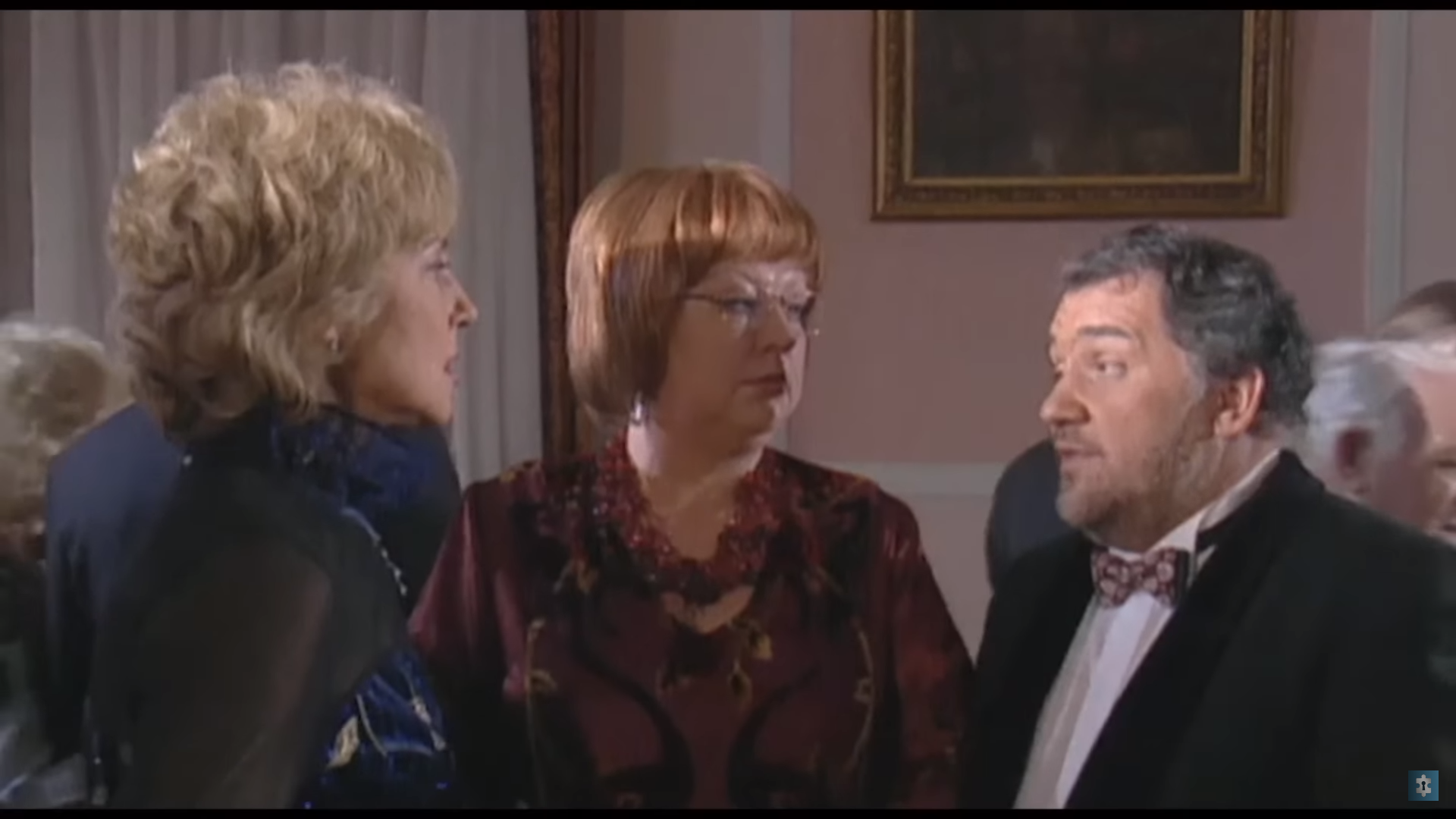


Marta: The 2005 Marta cooks for Danilov and hides her true feelings for him, but she acts at home in his apartment, speaks to him as an equal, and isn’t afraid to interrupt him when he’s working. She has another romantic option, a naval officer on a long voyage (which other characters amusingly take as a “girlfriend in Canada” cliché, but who turns out to be real). He’s masculine and gallant and seems to others like a good catch, but she doesn’t love him. We first see the 2023 Marta bringing a fish pie she has painstakingly made from scratch to a distracted and unappreciative Danilov; she is self-effacingly ready to vanish at any moment if necessary. The man who loves her unrequitedly is no longer an older naval officer, but a sincere country neighbor named Petia who invites her on dates to the local DK and collects mushrooms for her (2:35:25).
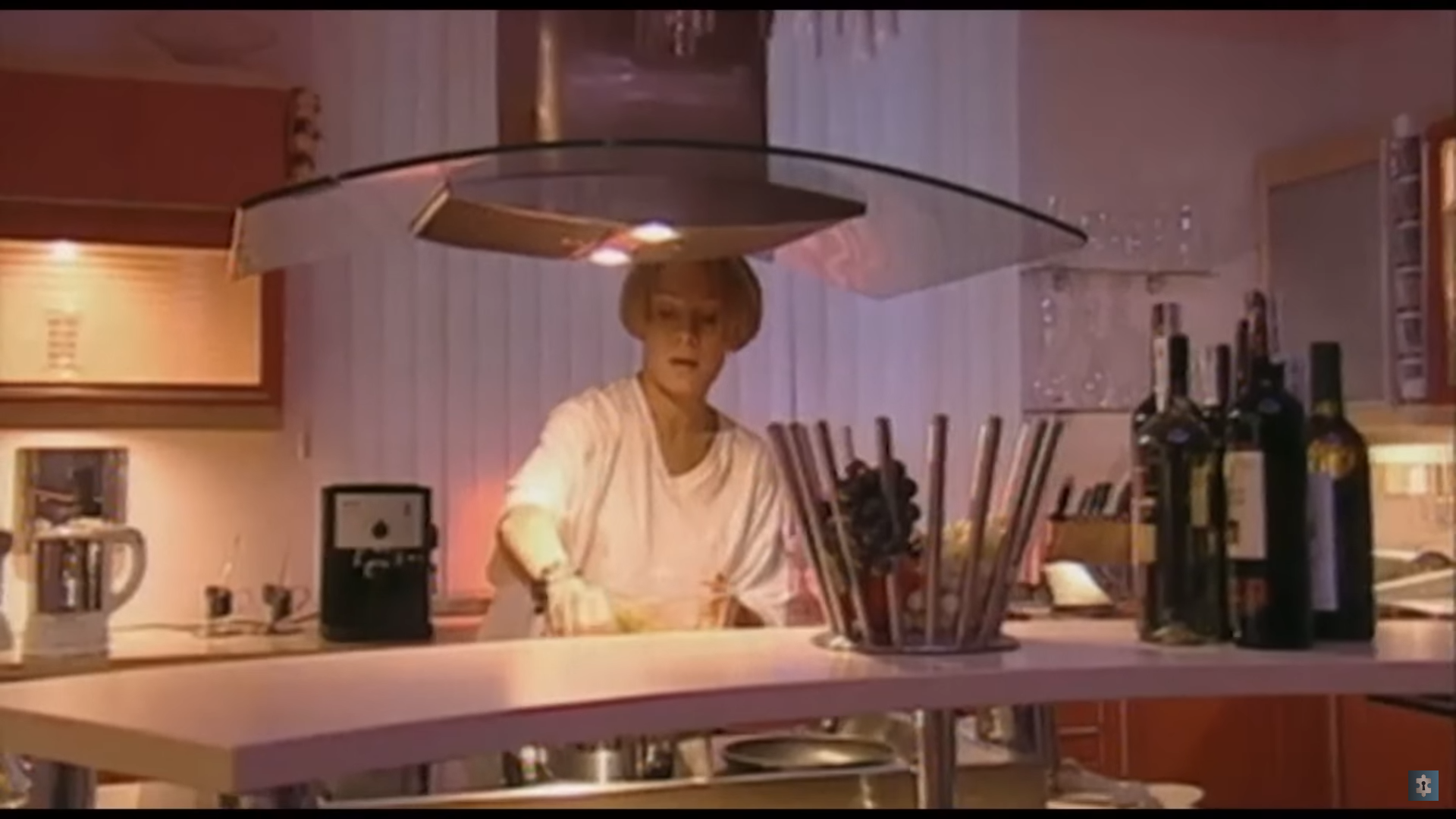

Lida: The 2005 version of Danilov’s lover is unabashedly materialistic and glamorous, living the stereotype of the post-Soviet woman who was told her top priority should be to land a rich man. The 2023 version is a journalist (a type that has grown markedly more negative on Russian television) with a professional manner and more educated habits of speech.


Veniamin: Danilov’s ex-brother-in-law is an exaggerated tragicomic alcoholic in 2005 with an alcoholic girlfriend. The 2023 version is still supposed to drink—we see him take a swig from a hip flask while he’s working—but it’s toned down quite a bit, as is his poverty. The girlfriend character doesn’t appear.

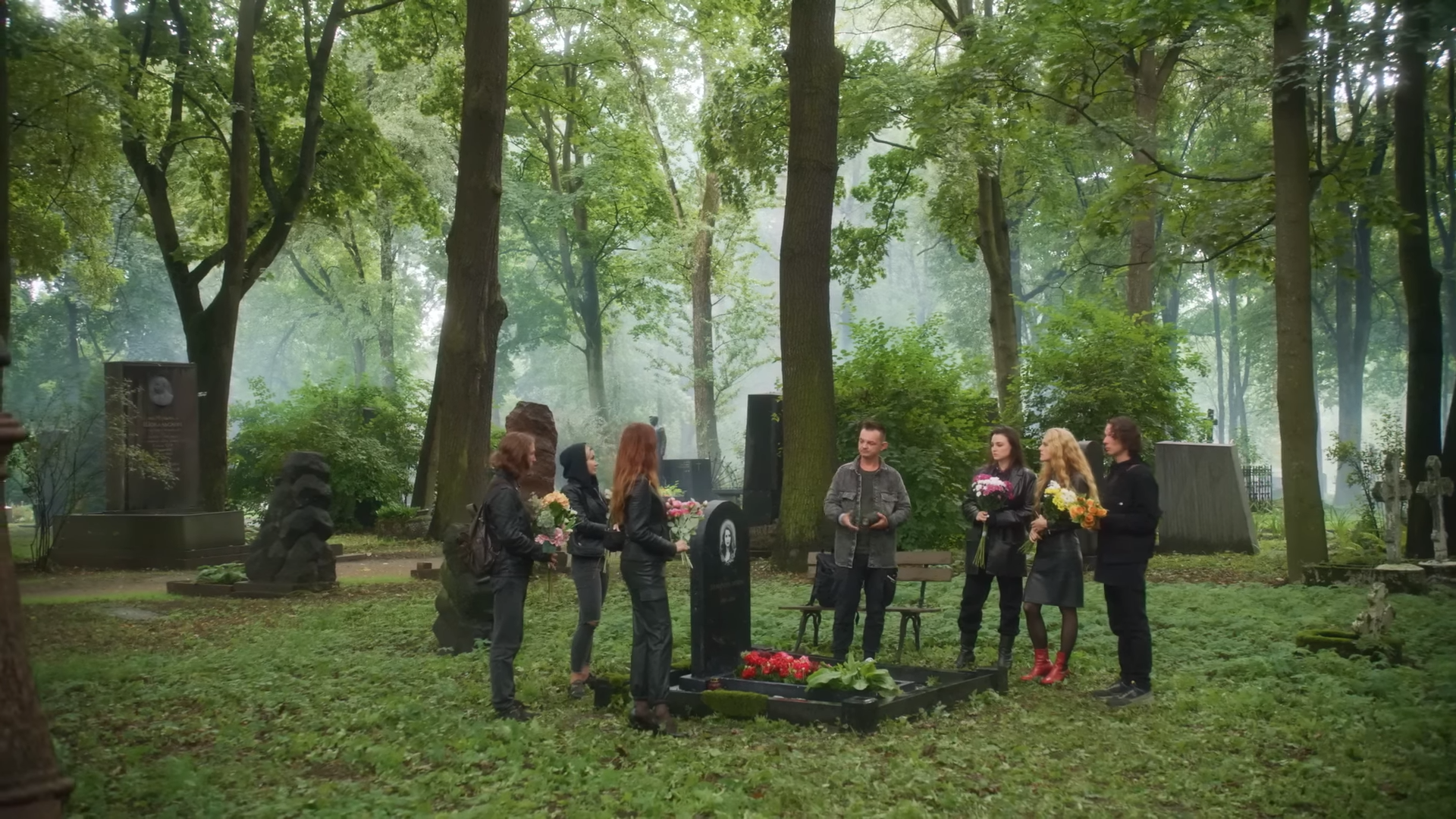
Detective Patrikeev: In 2005 the police investigator was a wily man in a hat who half-hid his intelligence and seemed like a descendant of honest Soviet policemen or even Dostoevskii’s Porfirii Petrovich. In 2023 his role is minimal, and something like law enforcement is carried out by the private security force of Danilov’s rich client Kuptsov.
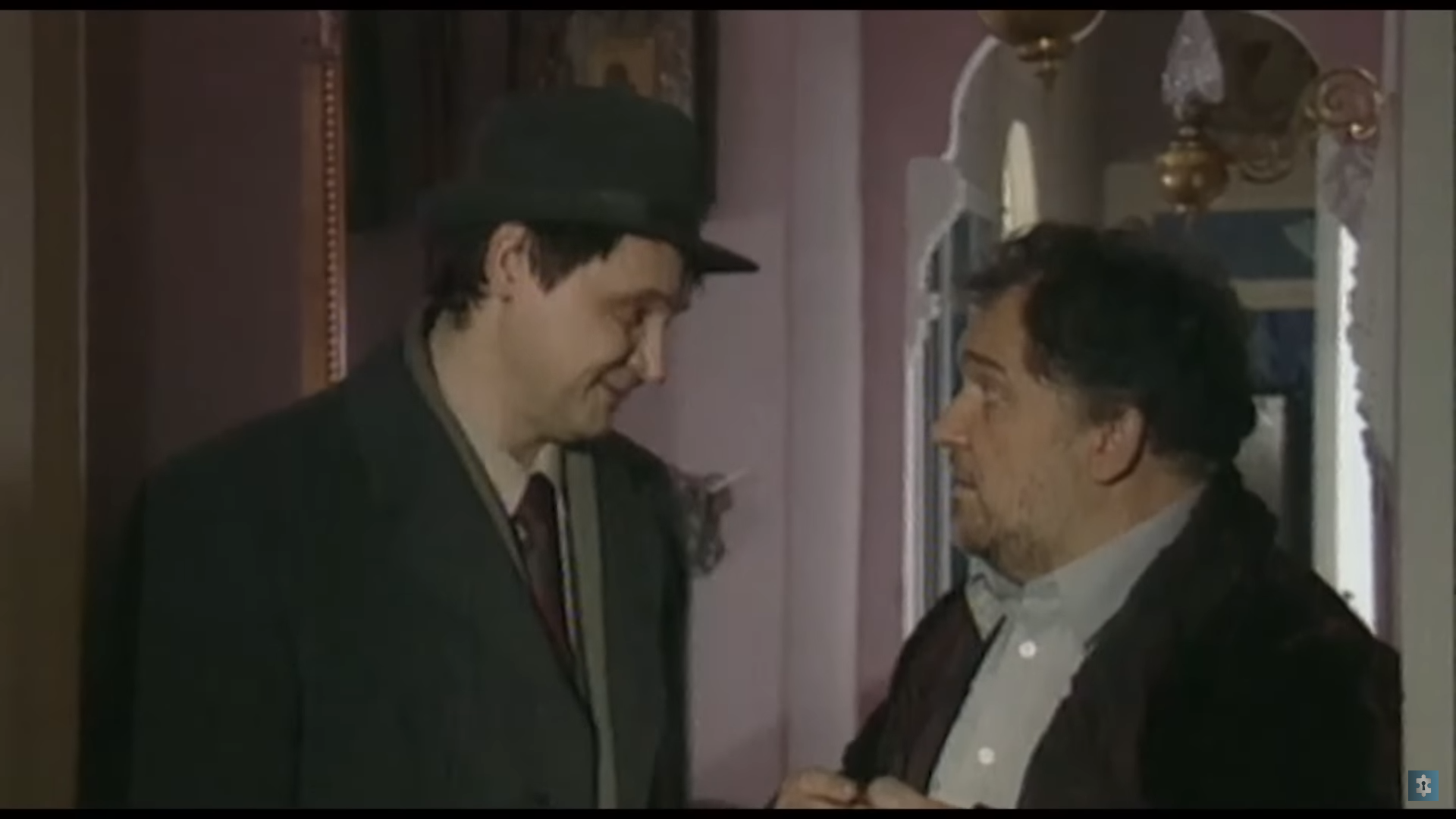
Differences besides the characters: In 2023 Tarasov torments Danilov with voice mail messages that seem to come from his dead wife, one of several plot points that rely on cell phones and recent technology. In 2005 we often see two characters in bed with each other where in 2023 we learn they slept with each other through dialogue. Danilov smokes on camera in 2005.
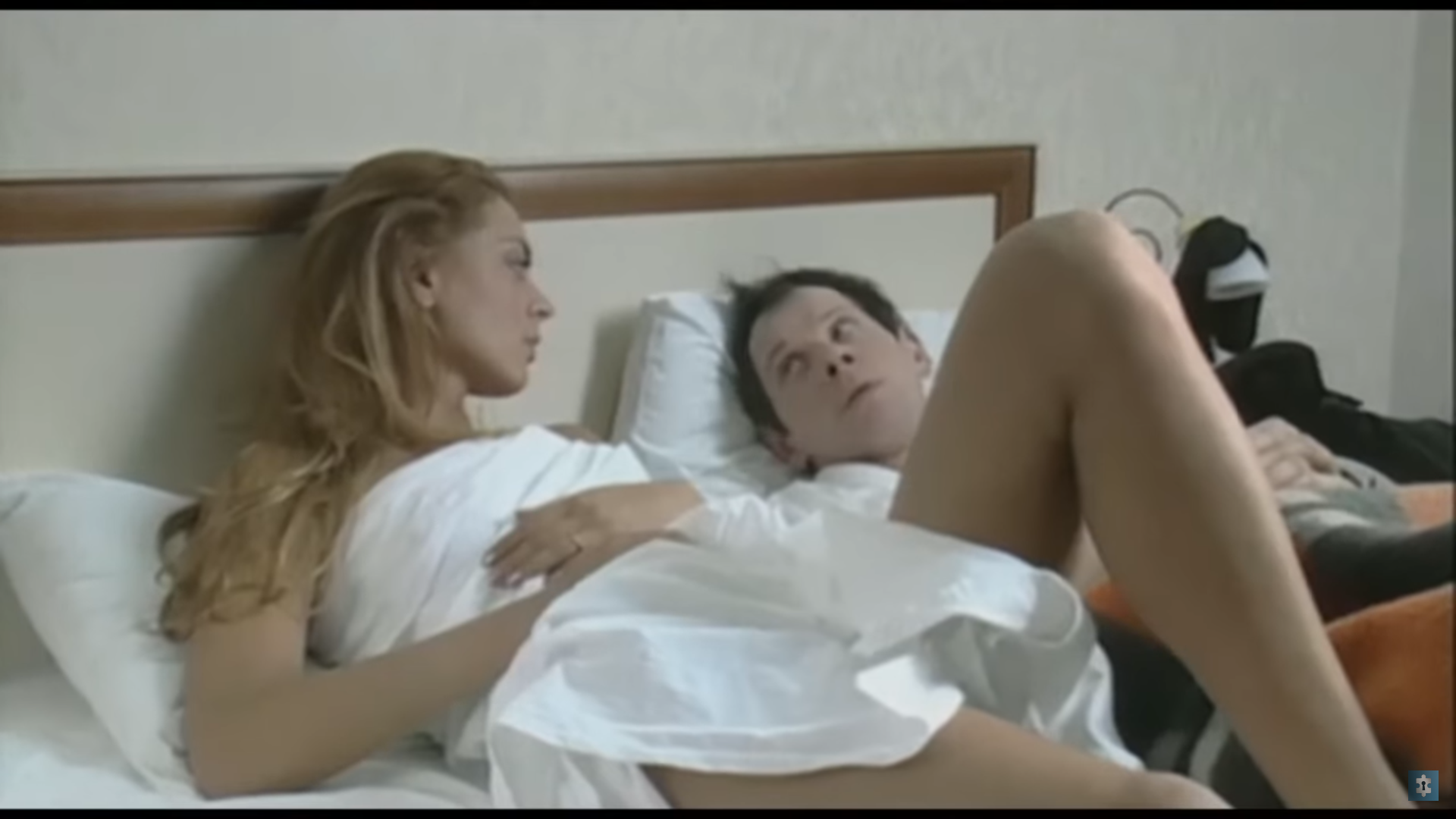
2005
2023
Khvoshchinskaya Sisters Digital Collection
My fellow Nadezhda Khvoshchinskaya fans—and, of course, fans of her sisters—will love the new site put together by a team of Khvoshchinskaya scholars as well as librarians and researchers at the University of Illinois Urbana-Champaign. It’s not just links, but actual downloadable .pdfs of the sisters’ works and works about them. And it’s not just the most famous pieces, but also things like a story Khvoshchinskaya translated from Norwegian for a newspaper originally by an author whose Wikipedia page currently exists only in Norwegian, Swedish, and Finnish. Last summer I spent hours trying to track down details about Khvoshchinskaya’s many translations, and I could find where a lot of the Italian and French ones came from, but her translations of Lars Dilling stumped me.
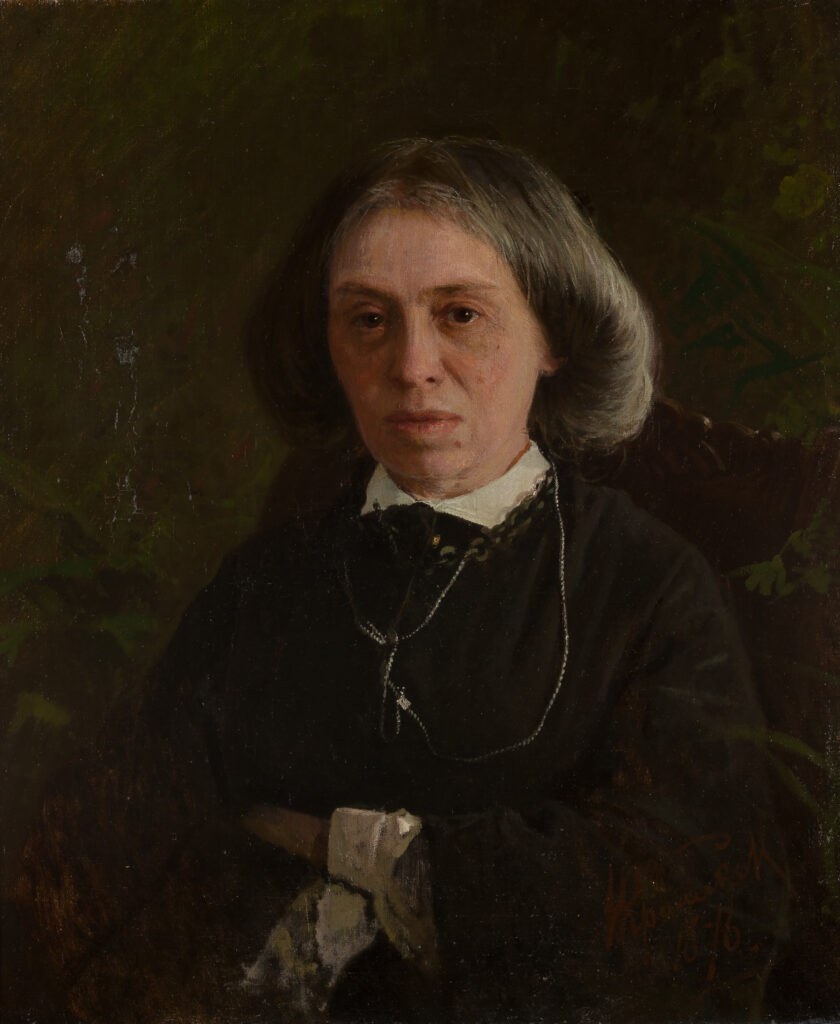
I’m going to keep up, in the senses of “leave online” and “occasionally maintain,” the bibliographies of Khvoshchinskaya’s works and secondary literature about them, but you’ll want to go to the Khvoshchinskaya Sisters Digital Collection first. You can also find the 1876 portrait of Nadezhda Khvoshchinskaya that Pavel Tretiakov commissioned from Ivan Kramskoi over there (and copied in this post).
Girls Are Smarter Than Old Men
My podcasts post did what I hoped, and now I have more good things to listen to than time to listen. Thanks to all who weighed in with suggestions! I wanted to highlight one podcast: Девчонки умнее стариков (Girls Are Smarter Than Old Men, after the title of an 1885 Tolstoi story also called “Little Girls Wiser Than Men”), recommended by jkdenne and surely of interest to readers of blogs like this one. Hosts Natasha Lomykina and Masha Lebedeva take pairs of books that did or didn’t make the shortlist for the Yasnaya Polyana Literary Award and second-guess the choices of the all-male selection committee.
I’m the exact kind of person who needed to hear the first episode, where they tear down a novel about a middle-aged man reflecting on his failures and disappointments. This, they argue, is a specific and idiosyncratic topic that could only interest a narrow set, but those people—men of a certain age—happen to be the ones deciding which books make the cut. They think the committee should care more about books with themes that matter to regular people, like post-partum depression and mother-daughter relationships.
But the podcast isn’t just provocative restatements of this thesis. It’s two people who obviously love reading saying interesting things about recent books written in many different languages (at least in the first several episodes, when the prize at stake is the one for foreign literature in Russian translation). I’ve already bought one book on their recommendation.
Long after they’d won me over as a listener, they did a translation comparison out loud. Colombian writer Juan Gabriel Vásquez’s novel El ruido de las cosas al caer (The Sound of Things Falling, 2011) was published in Russian twice in 2022 by the same publishing house—they had hired Spanish-to-Russian translator Maria Malinskaya to do it when television presenter Mikhail Kozhukhov, bored during COVID, came to them with a translation he’d done himself. Lomykina and Lebedeva discuss whether it’s true or even necessarily good that Kozhukhov’s translation was called “more dynamic,” analyze how a single passage was handled by each translator, and discuss their different renditions of the title. Should it be The Sound or The Noise of Things Falling? See episode six, starting around 13:00.
“Yesterday afternoon, a little after five”
If you like Russian poetry from after Lermontov and before Blok, you’ve probably read this by Nekrasov:
Вчерашний день, часу в шестом,
Зашел я на Сенную;
Там били женщину кнутом,
Крестьянку молодую.
Ни звука из ее груди,
Лишь бич свистал, играя…
И Музе я сказал:
“Гляди! Сестра твоя родная!”
prose paraphrase:
Yesterday afternoon, a little after five, I happened upon Haymarket Square; a woman was being beaten with a knout there, a young peasant woman. Not a sound from her breast, only the whistling of the whip as it played… And I said to my Muse: “Look! Your sister!”
Nekrasov wrote this poem in an album in 1873, claiming it was from 1848. He never published it, and it would not appear in his collected works until 1920. It’s a widely known and straightforward-seeming short poem, but not as simple as people think, according to Pavel Uspenskii and Andrei Fedotov. They focus on three possible readings: the “civic” reading, where the peasant woman is whipped by representatives of the state (174–78); the “ordinary situation” reading, where the whipping is a private act of violence (179–84); and the “album” reading, where the whole situation represents the impossibility of any poetry by someone like Nekrasov being fit for a lady’s album (185–86). The ambiguity of the last two lines, quite appealing to readers used to modernist poetry, probably seemed like a defect even to the author at the time, and that may be an additional reason why Nekrasov left the poem unpublished (184–85).
Reading 1
The “civic” reading was popular in Soviet literary criticism, and Uspenskii and Fedotov take as their starting point an article by E. Dushechkina first published in 1983. For Dushechkina the poem is about state violence. The pseudo-passive in line 3 (the verb bili without a subject) implies this; why else would the poet not specify who is holding the knout (175)? The woman’s silence in line 5 reflects the fact, noted by contemporaries, that being flogged with a knout was so painful that victims were unable to cry out (174). But the scene is more significant than a single person’s pain. Because of the way the words for knout and whip are used in other Nekrasov poems, it becomes a generalized “symbol of the suffering and humiliation of the defenseless and oppressed people” (qtd. p. 175). The link between the woman and the Muse in lines 7–8 shifts our attention to another state sin: the red marks presumably on the woman’s back are like the marks left by a censor’s red pencil (184).
For Uspenskii and Fedotov, this line of thinking is doubly Soviet: besides the ideological Soviet need to see Nekrasov as a realist who based his poems on actual events, there is the experience of living in the Soviet Union, which gave people the habit of identifying a dangerous but unspecified agent with the government (174–75). But this poem probably wasn’t based on a government-imposed punishment Nekrasov witnessed. At the time when he claimed the poem was written, such public floggings were rare, especially of women, and when they did happen, they happened in the morning, in another part of St. Petersburg, with a different kind of whip (174). It’s linguistically and situationally plausible that the unspecified agent of bili is someone else (175). Take away Dushechkina’s Soviet worldview, and there is no reason to assume the woman’s silence is literal, but the knout symbolic (175).
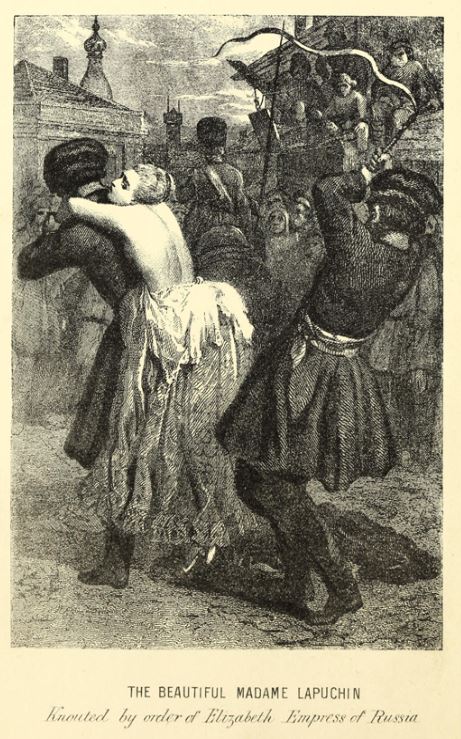
It’s not wrong to read the poem as depicting an action by the government, according to Uspenskii and Fedotov, but if you read it that way, you should read it primarily as a product of the poet’s imagination, not a pithy description of a real event (175–76). And this act of imagination has an unstated erotic aspect, since publicly whipping a woman presupposed stripping her to the waist. In several pieces of visual art from the eighteenth and nineteenth centuries, European artists depict this kind of violence against women in a sexualized way, unlike depictions of men being whipped, which were compassionate rather than erotic (176–78). Nekrasov may or may not have known these exact images or contemporary pornographic images of women being beaten, but he might have refrained from publishing the poem because you could read it with the poet as a voyeur who was turned on by the cruelty he saw (178).
Reading 2
Since we don’t need to assume the government was responsible for the woman being beaten, we can see it as an “ordinary situation” that happened in parts of St. Petersburg like Sennaia (Haymarket) Square. In the Soviet telling, this was one of the most “democratic” parts of the city, but to Uspenskii and Fedotov this is just a euphemistic way of saying it was considered a slum full of prostitutes and criminals where violent acts were common (179). Passages from Vsevolod Krestovskii’s The Slums of Petersburg (Петербургские трущобы, 1864–66) and Dostoevskii’s Notes from Underground (Записки из подполья, 1864), when read in context, show that Sennaia Square was thought of as a red-light district (179–80).
“Fallen women” in places like Sennaia were on the receiving end of violence from their neighbors. The woman in the poem could have been whipped not by agents of the state, but by “drunken clients or, perhaps, cabmen, in whose hands it is easy to picture a knout that is not symbolic, but real as can be” (182). And if we now imagine the knout as real, we can imagine the woman’s silence as metaphorical: it could represent the voicelessness of a doubly marginalized outcast who is “not only a representative of the silent peasant social estate, but is also most likely a woman of the night” (182).
Other poems by Nekrasov show women and animals on the receiving end of cruelty from peasant and merchant men, so it isn’t as if he saw the tsarist government as the source of all violence (180–81). If the Haymarket setting leads us to imagine the woman being beaten is a sex worker, then what do we make of the poet’s presence there? In one sense, he “gets exactly what he came for”: having come to the square presumably in search of sexual pleasure, he finds voyeuristic pleasure in watching the beating (183).
Reading 3
The third reading that coexists with the “civic” reading and the “ordinary situation” reading is the “album” reading. Dushechkina had also read Nekrasov’s poem in the context of the album it was written in, seeing a poetic dialogue with an earlier contribution by Turgenev (185). Uspenskii and Fedotov instead focus on the remarks Nekrasov wrote before and after the text of the poem. Nekrasov introduced the poem this way: “Having nothing new, I rummaged through my old papers for a long time and found a scrap of paper covered in penciled words. I could not make any of it out (the scrap, as far as I can remember, is from 1848) apart from the following eight lines.” After the text of the poem, he added, “forgive me if these lines do not entirely suit your elegant album. I failed to find or invent anything else” (186).
Uspenskii and Fedotov agree with an earlier argument by M. D. El’zon that the poem was written in 1873, not 1848. Why? Saying it was a draft and from long ago let Nekrasov distance himself from the shocking qualities of a poem about violence with erotic implications (186). Choosing 1848 in particular, a year associated with politics and censorship, let him guide the reader’s thoughts away from the erotic (186). But what else do these words framing the text do?
One possibility is that they let us read lines 7–8, where the woman and the Muse are both silent (the poet asks the Muse to look, not to speak) as a bit of the kind of high-society game poets had played in albums decades before:
In the atmosphere of the album, Nekrasov’s masterpiece unexpectedly takes on a high-society playfulness—the eight-line poem turns out to be a work whose pointe is that the poet cannot compose a poetic utterance suitable for the album, so he writes a poem about the impossibility of writing any poem at all. (186)
See Pavel Uspenskii and Andrei Fedotov, “‘Vcherashnii den’, chasu v shestom…’ N. Nekrasova: Al’bomnoe stikhotvorenie o gosudarstvennom nasilii, kvartale krasnykh fonarei i poeticheskoi nemote?” Novyi mir 8 (2022): 173–87. I’m becoming a huge fan of Uspenskii’s and his co-authors’ work: see earlier posts on their research on Panaeva (also Uspenskii and Fedotov) and Pasternak (Tat’iana Krasil’nikova and Uspenskii).
Behind the Wall (preface to the 1866 edition)
The preface below is from page 201 of V. Krestovskii [N. D. Khvoshchinskaia], Romany i povesti, vol. 8 (St. Petersburg, 1866). The 1866 text restores passages cut by the censor in the 1862 journal publication. The title and year of the story (“Behind the Wall. 1862.”) were printed on separate lines above the preface. Page 202 is blank, and the story proper begins on page 203, where the title but not the year is repeated. The next story appears under its title only, without the year or a preface. This preface to “Behind the Wall” was absent when the story was republished in 1880, 1892, and 1912–13. You can find a serialized translation of “Behind the Wall” (За стеною) starting here.
[Preface to the 1866 edition]
Three years ago, when these scenes appeared, they were taken to be what they in fact are: a quick sketch of something vital, a simple incident transcribed without any pretense of deciding who in it is right or wrong; the small frame into which the story was fitted did not leave enough space for even a slightly more detailed development of the plot and characters. The goal of the story was only to touch upon a question then beginning to interest society, how people feel constrained and suffer when no one is preventing them from satisfying their desires and no one is forcing them to suffer.—In three years, society has gone far in analyzing this question, and now when people come upon it in some literary work, they rightly no longer settle for implications, but demand a definite and clearly expressed opinion. If the reader of today should demand the same of these scenes, if they should leave so much unsaid that they cause a misunderstanding or arouse his indignation, then let the figure of the year when they were written serve as explanation or excuse. This is one side of our recent past told dispassionately… All of us are to blame for the composition and character of our common life, and perhaps traits can be found in a love from the time of serfdom that for many are familiar, not alien. The artless truth about old sorrows, transcribed without analysis and for that very reason more alive, may prove not without use as a guide in the new life beginning…
December, 1865.V. K.
[Предисловие из издания 1866 г.]
Три года назад, когда появились эти сцены, они были приняты за то, что они есть в самом деле: за беглый очерк насущного, за простой случай, записанный без претензии решать, кто в нем прав или виноват; маленькая рамка, в которую сложился рассказ, не давала места даже несколько более подробному развитию действия и характеров. Целью рассказа было — только коснуться вопроса, тогда начинавшего занимать общество, что люди стесняются и страдают, когда ничто не мешает им удовлетворять своим стремлениям и никто не вынуждает их страдать. — В три года, общество далеко пошло в разборе этого вопроса, и, встречаясь с ним теперь в каком-нибудь литературном произведении, справедливо требует уже на намеков, а мнения определенного и ясно выраженного. Если нынешний читатель потребует того же от этих сцен, если они своей неполнотой и недосказанностью возбудят в нем недоразумение или недовольство — пусть послужит для него объяснением или оправданием цифра года, когда они написаны. Это — рассказанная беспристрастно одна из сторон нашего недавнего прошлого… В складе и характере нашей общей жизни виноваты мы все, а в любви крепостных времен, может быть, найдутся черты знакомые и нечуждые многим. Безыскуственная, записанная без разбора, а потому именно, более живая правда о старых печалях, может быть небесполезна, как указание в новой, начинающейся жизни…
Декабрь, 1865.В. К.
A who’s who of pseudonyms
This must have been a good month to shop for books:

(This is the end of a 15-page catalogue advertising what a chain of bookstores was selling at their St. Petersburg, Kazan, and Warsaw locations. I think it appeared in multiple issues of The Herald of Europe; the image is from March 1868.)
Now on sale, War and Peace, Oblomov, Dombey and Son, No Way Out, Who Is to Blame?, La Dame de Monsoreau, The Family Chronicle, what I’m pretty sure is Villette, three separate collections by Russia’s leading prose satirist, tales of adventure about America…
Lots of authors went by their own names, as usual: Dickens, Tolstoy, Dumas, Goncharov, Aksakov, Avdeev.
Many are pseudonyms with no indication they are pseudonyms: Shchedrin (Saltykov), Stebnitsky (Leskov), Kokhanovskaya (Sokhanskaya), Currer Bell (Charlotte Brontë), G. Aimard (Olivier Gloux). No author at all is listed for what I assume is Herzen’s Who Is to Blame?
And one author has her pseudonym revealed: “Novels and Novellas, by V. Krestovsky (N. D. Khvoshchinskaya), 8 volumes. St. Petersburg. 1866. Price 8 rubles.” Apparently the “V. Krestovsky (pseudonym)” workaround—not yet needed to distinguish her from young Vsevolod Krestovsky through most of the 1850s, and established in the 1870s and 1880s—had not caught on. It looks like the dividing line in the main journal she published in was between 1868’s Two Memorable Days, when she was still “V. Krestovsky, the author of the novel In Hope of Something Better et al.,” and 1869’s First Struggle.
In so many places—unlike this ad—journals bent over backward to avoid saying this Krestovsky’s real name was Khvoshchinskaya. Seeing both names in the ad made me wonder if the actual 1866 books said “V. Krestovsky (N. D. Khvoshchinskaya)” on the title page, but it looks like they didn’t:

It’s not impossible that “Khvoshchinskaya” appeared on some other page that wasn’t included in the .pdf I got from interlibrary loan. Still, that probably ruins the story I was starting to come up with, where the 1866 edition of Khvoshchinskaya’s collected novels and novellas is hard to find today because it revealed her real name, and since she wanted her fiction tied only to “V. Krestovsky,” she somehow bought up the whole print run or otherwise made the books disappear.
Podcasts
Here’s what I’ve been listening to:
- The Slavic Literature Pod
I was excited to discover this one, which used to be called Tipsy Tolstoy. Matt Gerasimovich and Cameron Lallana talk mostly about Russian literature and film. Sometimes they read a long book over many episodes, but the episodes I’ve started with get through one short work in one go: Tolstoy’s Kreutzer Sonata (1889; with guest Tatyana Gershkovich) and “Alyosha the Pot” (written 1905), Khvoshchinskaya’s “On the Way” (1854), Zvyagintsev’s Leviathan (2014). - The Eurasian Knot
As a Sean’s Russia Blog fan from way back, I miss the old name The SRB Podcast, but Sean Guillory’s show remains excellent. The guests are wonderful, and the topics cover a lot of ground in the social sciences and humanities. And the name change makes sense, since it is actually, not just aspirationally, about more than Russia. - In Moscow’s Shadows
This is my favorite English-language source about events in Russia right now. Mark Galeotti is remarkably good at the one-person-podcast format, and from where I stand he seems both well-informed and admirably reluctant to go further than the evidence will take him. He was also great in June at a Pushkin House event with Ekaterina Schulmann (video).
I’m sharing these partly because I think they’re good, and you’d probably like them if you read this blog, but also as an excuse to ask all of you if you know of good podcasts about Russian or Slavic literature, culture, history, current events, etc. Please post a link in the comments if there is a podcast in any language that you’re enjoying!
I’d also love any recommendations you have for podcasts in Russian on any subject, as some that I used to listen to have ended. I sometimes listen to Живой гвоздь (the successor to Echo of Moscow) in podcast form, as well as Что случилось? from Meduza. My favorite in the last year or two has been the movie podcast Крупным планом from Kinopoisk, which hits that balance between friendly podcast banter and new information/novel opinions.
If-if or if-then, other than or more than, and lots of pronouns
Thanks to all who have been reading “Behind the Wall,” especially those who have offered suggestions or helped me think about which violin pieces were mentioned. Before I release the story as a dual-language e-book, I want to find and translate the 1866 preface; an 1888 commentator quotes what I think is only part of it:
Three years ago, when these scenes appeared, they were taken to be what they in fact are: a quick sketch, a simple incident described without any pretension of deciding who in it is right or wrong. The goal of the story was only to touch on a question then beginning to interest society, that people feel constrained and suffer when nothing prevents them from satisfying their wishes and nobody compels them to suffer. In three years society has gone far in considering this question, and now when people come upon it in some literary work, they rightly no longer settle for hints, but demand a definite and clearly expressed opinion. (qtd. in Arsen’ev 305)
Before the final version I also hope to get more help and advice from you! Please feel free to comment here or contact me privately if you have any feedback, and be as candid as you like; I’ll only be glad for your criticism. I’m especially curious whether you agree with my choices below.
1.
— Как любовницу вы меня любите! вскричала она: — как вещь вы меня любите! Я красива, вам жаль выпустить! До моего чувства вам нет дела! до моего достоинства, до моего мучения вам нет дела! Я хороша — вот и все, пригляжусь, ласка прискучит… Как же, в самом деле, связаться навечно…
The part I’ve wavered on is Я хороша — вот и все, пригляжусь, ласка прискучит…, which I translated as “I’m pretty and that’s all, get tired of looking at me or bored of my caresses and…” (installment 13). I think пригляжусь is in Ushakov’s sense 2 of приглядеться, a near-synonym of надоем but specifically about looking at people and things. And I ended up reading пригляжусь, ласка прискучит as an energetically elliptical sentence that trails off, (если я) пригляжусь (вам), (если моя) ласка (вам) прискучит, (то)…: if you get tired of looking at me, if you get bored of my caresses, then… But before that I was hearing it as an implied if-then: (если я) пригляжусь (вам), (то моя) ласка (вам) прискучит: if you get tired of looking at me, then you will get tired of my affection/caresses. Russian speakers: is it clear to you what is meant by пригляжусь, ласка прискучит in this context?
2.
— Полно, милая, выговорил он, едва успев прервать ее: — как честный человек, я больше тебя никого не любил…
Она вскрикнула.
— Господи, Господи! никого? точно никого? повторяла она, целуя его и рыдая: — никогда, и теперь никого?
— Ну, никогда, нельзя сказать, продолжал он: — год велик; я, случалось, и увлекался…
— А, Бог простит! отвечала она с резким, искренним смехом среди рыданий.
— Но ни одной женщины так, как тебя; я свободен.
As I read this bit of dialogue, it depends on the speaker and listener having different interpretations of an ambiguous Russian sentence. I think я больше тебя никого не любил could mean either “I have loved no one other than you” (as she hears it) or “I have loved no one more than you” (as he means it). Is that right, and does this English approximation come close?
“Enough, darling,” he said, just barely managing to interrupt her. “As I am an honest man, I have not loved anyone…”
She cried out.
“God, God! Not anyone? Really, no one?” she repeated, kissing him and sobbing, “you never have, and you don’t now?”
“Well, I can’t say ‘never,’” he went on. “A year is a long time; there were occasional infatuations…”
“Oh, God will forgive you!” she replied with a burst of sincere laughter in the midst of her sobs.
“But I did not love any other woman as much as you; I am free.” (installment 11)
3.
A lot of the story is just one line of dialogue after another without any narrative adornments like “he said,” “she asked,” “he replied,” “she reiterated.” (We do get these when one of them interrupts the other.) Sometimes what is said makes it obvious who said it (“the inconsolable widow!”), but often it doesn’t (“why did you change your mind?”). In Russian, there are lots of forms that identify either the speaker’s or the addressee’s gender. My solution here was to do nothing; I just used non-gendered forms in English where Russian has gendered ones, like “said” for both skazal and skazala, and I didn’t add anything to make up for it (one exception: I added “she went on” in installment 12 when the same character speaks twice in a row). This means it’s probably easier to get lost and have to go back to check who’s speaking in English, but my hope is that it was usually clear. Was it?
4.
I saved the biggest one for last. None of the characters in this story has a name—it’s just the narrator, “he,” “she,” his servant, and the landlord’s servant. But the man and woman switch back and forth between the informal pronoun ty and the formal pronoun vy over and over for different reasons. Sometimes it’s as a joke, sometimes it’s to hide their intimate relationship from the servant, sometimes it’s because one of them is hurt or offended or wants to suggest their former intimacy is over. And the formal pronoun (used to show a negative emotional reaction to what came before) can be combined with familiar, emotional language that I wouldn’t characterize as formal. This is like those pronouns in Pisemskii, but more. (This was less of a problem for translation, but Khvoshchinskaya also has the woman use the formal pronoun when speaking to servants who were presumably freedmen, an issue that was topical after 1861: the woman makes the linguistic choice that was approved of by Nekrasov and mocked by Lev Tolstoi.)
I actually considered using “thou” and “you” all through the story, but I thought that would be too distractingly archaic and might make these educated nobles speaking standard literary Russian sound folksy and rural (cf. Gaskell’s Lancashire).
Then I thought about formal markers, like “you” vs. “YOU”/“You”/“you”/etc., but this also seemed distracting.
I thought about ignoring the switches in the translation except for the one time where the narrator comments explicitly on the use of the formal “you” in Russian (“the formal ‘you’ he now used was likely due to the servant’s presence,” installment 7). I’d then rely on the phrasing of each line in English to show the varied reasons for switching between formal and informal. But I was afraid this would be much less noticeable to the English reader than the pronoun shifts are to the Russian reader. The fact that formal, cold language was not always used with the formal pronoun (see question 1 above) also made this hard.
So in the end I added lots of phrases like “she returned to the informal pronoun” and “formal again” and “still formal.” I didn’t add anything when I thought the English phrasing already conveyed something similar (like “to offer you my hand and heart” in installment 5, which the narrator describes as a “timid joke,” or “you wouldn’t be deceiving me, good sir?” in installment 6). But I added whole clauses to call attention to things like the man avoiding the pronoun choice in his first eight or nine sentences in installment 11. Was this annoying? Did it add anything if you don’t speak Russian? Is there a better way?
Behind the Wall (14)
“And that isn’t an insult either?” she asked abruptly, without emotion.
“What?”
“What you just said.” She again used the formal “you.” “That I am prepared… how did you put it? To throw myself at the first dashing young man to ride by? I quite liked that expression.”
“Did I say that?”
“You are forgetting what you are saying.” Still formal.
“About you?” he cried.
“Who else? I was unfaithful to my husband…”
“If that’s how you choose to hear everything…” he began and then stopped. “Yes, it doesn’t matter, it’s better this way,” he went on hurriedly and without raising his voice. “It’s better this way. You said—after five years of love!—that I love you only as a lover, and now you’ve completed the picture: I am capable of saying something that repulsive to you… Get out…”
She threw herself upon him.
“I don’t need your tears!” he shouted, pushing her away. “I’ve had enough of your nerves! Your kind is made of nothing but nerves: your love is just nerves, your God is just nerves… Forgive you? What? Can forgiveness undo all this? Your soul is being destroyed”—he imitated her voice—“and you think I’m having a good time?”
She fell onto the couch and sobbed.
“I’ll tell you what you want,” he went on firmly, speaking each phrase in isolation, like a man who is upset, “you want a position. Your renommé is terribly precious to you. This is the other side of your pangs of conscience, don’t deny it! Here there is your daughter, and your maternal love, and all kinds of things that were never so much as mentioned before. You’ve heard more than enough about social questions, and I’ve heard more than enough about that. You should have thought of that before, when you were assuring me that I was the most important thing for you. Why did you say too much? Now it’s come to proof, and you retreat into nerves! What is this, love? Think it through, look at the situation and simply say, ‘I am deathly afraid that this or that cousin or Madame so-and-so will close her doors to me…’ But you don’t fear God, that’s nonsense! If you did, there wouldn’t have been anything five years ago either…”
“You don’t believe that either?” she cried, returning to the familiar pronoun.
“I don’t.”
“But how am I to prove to you that I can’t bear to look at myself? What can I swear by…”
“Nothing. I won’t believe you. I see what this is.”
“What is it, then?”
“Must I repeat it a hundred times? Cowardice, pettiness, lack of love.”
“I don’t love you?”
“What else can I conclude?”
“Listen,” she cried, “God knows what this is! No, this has to end!”
“As you like. That’s what I said at the beginning!”
“Maybe it’s too late. Too late!” she repeated in despair. “Just now I was unjust to you… You love me even less…”
“Well… yes,” he replied. “I did not enjoy the last quarter of an hour.”
“Darling, for the sake of all that’s holy!”
She dropped to her knees.
“Give me your hands, forgive me, take my life…”
“Don’t say too much,” he interrupted her.
“Forgive me! Don’t judge me so… That everything is just nerves… no, truly… believe me, this is more than I can bear! Well, think, suppose I am with you… what about my little girl? What shall I tell her? What will I do with her? I mean, she will despise me too…”
“Make her respect you.”
“But how, how can I do that? Respect me? What will she hear about her mother? What will they say about her for that matter when she grows up, thanks to me?”
“Teach her to despise them in her turn; her life is ahead of her, in her time people will not live by our foolish rules; show her an example…”
“An example…! Lord, what an example! This is the example—a homeless mother who forgot her shame, a sinner…”
“Well, who’s stopping you? Be the honest widow, open a salon! Fill her mind with dreams of a courtier for a husband and fleurs d’orange at the wedding. And the traditional loaf of bread, and the priest, and the parental blessing…”
“Listen…! For the last time!” she cried, beside herself. “For the last time!”
“I’m listening.”
“Do you still love me?”
“What do you mean, do I love you? You have decided that this is all I love, your body; we have different ideas about who loves whom how…!”
“Even so… Do you love me?”
“I do.”
“I love you to the point of madness. I shall die if I part from you… Don’t have that sin on your soul… I will come to a horrible end.”
“Don’t say too much.”
“It’s not too much… I am not myself… Well, do you love me, or what?”
“I do.”
“Someone has to yield. Yield to me. Marry me.”
“You yield,” he replied, starting to laugh.
“Why?” she asked, at a loss.
“For the thousand and first time, why? Because no one knows the future. Anything could happen. I might awkwardly trample on your ideals, or you might treat me to another half hour like this, and all our bliss will have gone to the devil, without any way for us to separate.”
“Then throw me out.”
“My wife? And she’s the one who’s afraid of scandals!”
“Ah! That’s what this is about: you fear them yourself! And it won’t be scandalous, low, and cruel when you fall in love with someone else and get rid of me, your lover? That will be honest?”
“And what if you fall in love with someone else yourself and run off?”
“Me…?”
“Who knows what you might do…? And I’m no angel, there is nothing in me to inspire eternal love…”
“Listen…”
She could hardly breathe.
“You see,” she went on, “I am scarcely alive. Tell me, what do you want from me?”
“Now? Nothing else.”
“Nothing?”
“Nothing.”
“I shall leave town tomorrow, remember that.”
He didn’t answer.
“I shall jump off a bridge right after I leave your apartment.”
“You have a daughter,” he said quietly.
All was quiet, only her sobs and moans could be heard; she was in pain. He did not stir. This went on a long time. She got up.
“Farewell.”
“Farewell,” he said.
“Listen…”
“Listen,” he interrupted her. “Look around; do you like it here…? Stay…!”
The silence grew terrible. Suddenly the door burst open, and her quick steps were heard going down the corridor to the stairs…
My neighbor did not go to bed all night and stayed home the next morning. The morning was dark, as if dawn had never come. At noon, as always, came the long whistle from the railroad…
Had she gone, or not…? Toward evening there was a racket behind the wall; my neighbor had gone, people were taking away his things: he had moved out of the apartment.
previous | first installment (this is the end of the story)
appendix: preface to the 1866 edition
“Behind the Wall” is a translation of “За стеною” (1862) by Nadezhda Khvoshchinskaya.
— И это тоже не оскорбление? спросила она сухо и резко.
— Что?
— Вот, что вы сейчас сказали. Что я готова… как вы сказали? броситься первому проезжему молодцу? Мне очень понравилось это выражение.
— Я сказал это?
— Вы забываете, что говорите.
— О тебе? крикнул он.
— О ком же еще? Ведь я изменила моему мужу…
— Если ты все так слушаешь… начал он и остановился. — Да, все равно, тем лучше, продолжал он поспешно и не возвышая голоса: — тем лучше. Ты сказала… после пятилетней любви!.. что я люблю тебя только как любовницу, а теперь довершила: я способен сказать тебе такую мерзость… Поди прочь…
Она кинулась к нему.
— Не надо мне твоих слез! вскричал он, отталкивая ее: — отвяжись с нервами! У вас все нервы: и любовь ваша нервы… и Бог ваш — нервы… Простить? Что? Ты прощеньем воротишь, вот, это? В тебе душа убита (он передразнил ей голос), а мне весело?
Она упала на диван и рыдала.
— Я тебе скажу, чего ты хочешь, продолжал он твердо и отрывисто, как человек раздраженный: — ты хочешь положения. Твое реноме тебе страх как дорого. Это изнаночка угрызений вашей совести, не отрекайтесь! Тут является и дочь, и материнская любовь, и все, о чем прежде и помину не было. Ты наслушалась общественных вопросов, а я этого наслушался. Ты бы прежде об этом думала, когда уверяла, что я для тебя выше всего. Зачем говорила лишнее? Теперь дошло до доказательств — ты назад, и в нервы! Что ж это, любовь? Разбери, разгляди и скажи попросту: «боюсь я до смерти, что от меня кузина такая-то, мадам такая-то двери запрут»… А Бога ты не боишься — вздор! Если б боялась — и пять лет назад ничего бы не было…
— Ты и этому не веришь? вскричала она.
— Не верю.
— Но как же я докажу тебе, что мне страшно влгзянуть на себя? как мне поклясться…
— Да никак. Я не поверю. Я вижу, что это.
— Что же?
— Сто раз повторять? Трусость, мелочность, недостаток любви.
— Я не люблю тебя?
— А то что же?
— Послушай, вскричала она: — это Бог знает что! Нет, это надо кончить!
— Как тебе угодно. Я с того начал!
— Может быть, уж и поздно, поздно! повторила она в отчаянии: — я сейчас была виновата перед тобой… Ты любишь меня еще меньше…
— Ну… да, отвечал он: — в эту четверть часа мне нехорошо было.
— Милый, ради всего святого!
Она бросилась на колени.
— Дай мне свои руки, прости меня, возьми мою жизнь…
— Не говори лишнего, прервал он.
— Прости меня! Не суди меня так… Что все нервы, да нервы… нет, право… Поверь же, это выше моих сил! Ну, подумай: ну, я буду с тобой… девочка моя как же? что же я ей скажу? куда я ее дену? Ведь и она будет меня презирать…
— Заставь, чтоб уважала.
— Но как же, как я это сделаю? Уважать? Что она услышит о своей матери? Что о ней самой скажут, по моей милости, когда она выростет?
— Выучи ее презирать тоже; ее жизнь впереди, в ее век по-нашему глупо жить не станут; покажи ей пример…
— Пример!.. Господи, какой пример! Это пример — мать бездомная, стыд забыла, грешница…
— Ну, кто ж мешает? вдовствуй себе честно, салон открой! Ну, мужа ей камер-юнкера, флёрдоранжи ей в голову. Каравай ей, попа, благословение родительское…
— Послушай!.. В последний раз! вскричала она вне себя: — в последний раз!
— Слушаю.
— Ты меня еще любишь?
— Как, люблю? Ты решила, что я люблю только, вот, твое тело; мы разно понимаем, как кто любит!..
— Хоть так… Любишь?
— Люблю.
— Я тебя люблю до безумия. Я умру, если с тобой расстанусь… Не бери на себя греха… Я страшно кончу.
— Не говори лишнего.
— Нет, не лишнеғо… Я себя не помню… Ну, любишь, что ли?
— Люблю.
— Кому-нибудь уступить надобно. Уступи мне. Женись.
— Уступи ты, отвечал он и засмеялся.
— Почему? спросила она, потерянная.
— В тысячу первый раз, почему? Потому что будущего никто не знает. Неровен час. Я как-нибудь неловко затрону твои идеалы, или ты подаришь мне, вот, этакие полчасика — и все блаженство к чорту, а развязаться нельзя.
— Тогда выгони меня.
— Жену-то? А еще сама боится скандалов!
— А! вот в чем дело: ты сам их боишься! А то будет не скандал, не низость, не жестокость, когда ты влюбишься в другую, а меня, любовницу, выживешь? То будет честно?
— А как ты сама влюбишься в другого и убежишь?
— Я?..
— Кто тебя знает?.. Да и я не ангел, и меня не за что любить вечно…
— Послушай…
Она задыхалась.
— Ты видишь, я едва жива. Скажи мне, чего ты от меня хочешь?
— Теперь? Ничего больше.
— Ничего?
— Ничего.
— Я уеду завтра, помни это.
Он не отвечал.
— Я с моста брошусь, когда пойду отсюда.
— У тебя дочь… тихо сказал он.
Все затихло, только слышались ее рыдания и стоны; ей было больно. Он не шевелился. Это длилось долго. Она встала.
— Прощай.
— Прощай, сказал он.
— Послушай…
— Послушай, прервал он: — посмотри кругом; хорошо?.. Останься!..
Молчание сделалось страшно. Вдруг дверь распахнулась, и ее поспешные шаги послышались по корридору, к лестнице…
Сосед не ложился всю ночь и утро оставался дома. Утро было темное, точно не рассветало. В полдень, как всегда, раздался долгий свисток с железной дороги…
Уехала она, или нет?.. К вечеру за стеной поднялась возня: сосед выехал, люди убирали его вещи: он оставил квартиру.

 XIX век